

Where Can I Buy Signed Soccer Memorabilia From World Cup Winners?
Looking for signed memorabilia from World Cup winners? Learn where to buy authenticated pieces, what to check and how to choose the right one.
Where can you buy signed soccer memorabilia from World Cup winners?
Specialist sports memorabilia retailers are a useful place to begin when searching for signed memorabilia from World Cup winners.
Auction houses and other memorabilia sellers can also offer pieces connected to famous international players.
The important details are the same regardless of where you shop.
You should be able to establish:
- Who signed the item
- What the item is
- How the autograph was authenticated
- What documentation comes with it
- Which World Cup the player won
- Whether the item represents the player's international career
- Whether there is any specific provenance
- Whether the item is framed
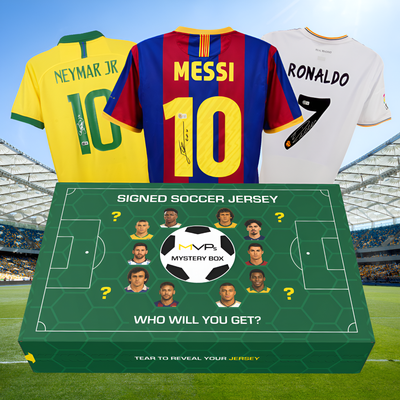
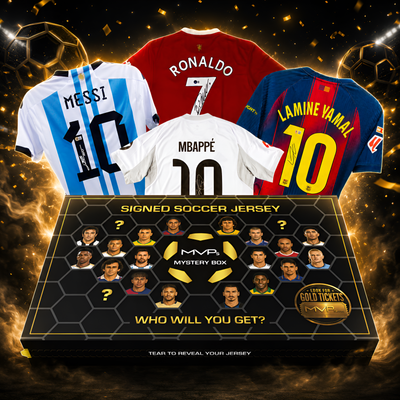
MVPs currently has a selection of signed memorabilia from World Cup winners across several product categories.
Its current soccer collection includes a Pelé signed vintage Brazil jersey, a Lionel Messi signed Argentina home jersey, Ronaldo Nazário signed Brazil jerseys, a Patrick Vieira signed France 1998 World Cup jersey and signed memorabilia from other World Cup-winning players.
The exact selection changes as products sell and new items become available, so buyers should check the current product details before purchasing.
Which World Cup winners have signed memorabilia available?
The available selection changes, but MVPs currently features signed memorabilia from several players who have won the FIFA World Cup.
Pelé won the World Cup with Brazil in 1958, 1962 and 1970.
Ronaldo Nazário was a member of Brazil's World Cup-winning teams in 1994 and 2002.
Rivaldo won the World Cup with Brazil in 2002.
Patrick Vieira won the World Cup with France in 1998.
Zinedine Zidane won the World Cup with France in 1998.
Lionel Messi won the World Cup with Argentina in 2022.
These players represent very different periods of World Cup history, giving collectors plenty of directions to explore.
Can you buy a signed World Cup jersey?
Yes.
Signed national team jerseys are among the most recognizable forms of World Cup memorabilia.
MVPs currently lists signed jerseys from several World Cup winners, including:
- Pelé signed Brazil jerseys
- Lionel Messi signed Argentina jerseys
- Ronaldo Nazário signed Brazil jerseys
- Patrick Vieira's France 1998 World Cup jersey
- Rivaldo signed Brazil jerseys
A national team jersey can create a direct visual connection to the player's international career.
The exact shirt design and season can also add another layer of interest.
Can you buy memorabilia from a specific World Cup?
Yes.
Collectors can choose memorabilia connected to a particular tournament.
The 1998 World Cup can lead collectors toward French legends such as Patrick Vieira and Zinedine Zidane.
The 2002 World Cup offers a strong connection to Brazil's Ronaldo Nazário and Rivaldo.
The 2022 World Cup provides a natural focus on Lionel Messi and Argentina.
The item itself should be checked carefully before attributing it to a particular tournament.
A signed national team jersey from a player who won the World Cup does not automatically represent the exact tournament in which they won it.
Can you buy signed World Cup memorabilia from multiple players?
Yes.
A single item can sometimes feature multiple signatures.
MVPs currently lists signed Brazil jerseys featuring several legendary players, including Ronaldo, Pelé, Kaká and Roberto Carlos.
Multi-signed memorabilia can be particularly interesting for collectors who want one item to represent a generation or team.
The authentication should clearly cover the signatures on the item.
What should you look for when buying signed World Cup memorabilia?
Start with the player's World Cup history.
Then look closely at the specific item.
The strongest purchases have a clear story, credible authentication and enough information for the buyer to understand exactly what they are getting.
Check the player's World Cup record
Make sure the player actually won the World Cup.
Players can have outstanding international careers without winning the tournament.
Others reached finals but finished as runners-up.
Some were part of winning squads but played different roles within those teams.
For a collector specifically searching for World Cup winners, checking the player's record removes any uncertainty.
Check which World Cup the player won
A player can have a long international career spanning several tournaments.
Knowing the winning year gives the memorabilia additional context.
Pelé's three titles came in 1958, 1962 and 1970.
Ronaldo Nazário's World Cup-winning campaigns were in 1994 and 2002.
Rivaldo was part of Brazil's 2002 winning team.
Patrick Vieira and Zinedine Zidane were members of France's 1998 World Cup-winning team.
Lionel Messi captained Argentina to the 2022 World Cup title.
The tournament year can help you decide which piece fits your collection.
Check the national team
The shirt or item should match the story you are interested in.
A Brazil shirt signed by Ronaldo Nazário naturally connects with his international career.
An Argentina shirt signed by Messi connects with his World Cup-winning career.
A France 1998 jersey signed by Patrick Vieira has an even more specific tournament connection.
The team identity can be just as important as the player when building a collection.
Check the exact item
Look at the product description carefully.
A signed jersey, signed soccer ball, signed cleat and signed photograph all offer different collecting experiences.
The item can also have its own historical connection.
A World Cup program signed by Pelé has a different story from a modern Brazil jersey signed by Pelé.
A trading card signed by Messi provides a different display option from a signed Argentina shirt.
Knowing exactly what the item is helps you make a better choice.
Check the signature
The autograph should have credible authentication.
MVPs states that its signed memorabilia is authenticated through established authentication companies including Beckett Authentication Services and PSA.
Individual product listings identify the authentication associated with the collectible.
Check the documentation supplied with the specific item rather than relying solely on a general statement about a seller's inventory.
Check the condition
Examine both the collectible and the autograph.
A jersey can have creases, marks or other signs of handling.
A photograph can have fading or damage.
A trading card can have condition issues that affect its presentation.
A soccer ball or cleat can show signs of wear.
The condition should be clear before you purchase.
Check the provenance
Provenance describes the documented history of a collectible.
It can help explain where an item came from and how it reached its current owner.
This becomes particularly useful when a seller makes a specific historical claim.
If a collectible is described as being connected to a particular World Cup match, signing event or player appearance, supporting documentation can provide valuable context.
Check whether the item is framed
Framing can make a signed jersey or photograph ready for display.
It can also change the amount of space the collectible requires.
MVPs currently lists several framed signed World Cup-related jerseys.
Check the individual product description to see whether framing is included.
Check the presentation
The presentation should suit the collectible.
A signed jersey can make a strong wall display.
A signed soccer ball can work well in a display case.
A signed photograph can be framed alongside other pieces.
A trading card can be displayed in a smaller cabinet or case.
Think about the final display before buying.
Is signed memorabilia from World Cup winners good to collect?
It can be an excellent way to build a soccer memorabilia collection around international football history.
World Cup winners span generations.
Brazil's five World Cup titles produced several generations of famous players.
France's winning teams included stars such as Zidane and Vieira.
Argentina's 2022 triumph added Messi to the list of World Cup-winning legends.
Collectors can therefore build a collection around one country, one tournament, one player or several generations.
Why collectors like World Cup memorabilia
The World Cup provides a natural historical theme.
Every tournament creates new stories, while previous editions become part of soccer history.
Collectors can focus on:
- World Cup-winning players
- One national team
- One tournament
- Multiple winning generations
- Legendary captains
- Famous goalscorers
- Players from one position
- A specific World Cup era
That gives collectors plenty of room to build something personal.
Are signed World Cup memorabilia valuable?
Some pieces can be highly desirable.
The value of a signed collectible depends on factors such as the player, item, autograph, authentication, condition, rarity, provenance and presentation.
A signed item from Pelé carries a different historical context from one signed by a more recent World Cup winner.
A collectible connected to a particular tournament can also appeal to collectors who focus on that period.
There is no universal value for signed World Cup memorabilia.
Each item needs to be assessed individually.
Does winning the World Cup make memorabilia more collectible?
A World Cup victory can give a player's memorabilia an important historical connection.
The achievement becomes part of the player's career story.
A national team shirt, photograph or other collectible can therefore represent more than the player's individual career.
The exact item still matters.
A shirt signed by a World Cup winner can be a strong collectible even when it was not worn during the tournament.
If an item is claimed to be match-worn, match-issued or connected to a particular game, that claim requires separate evidence.
Does a World Cup-winning shirt make a good centerpiece?
Yes.
A signed national team jersey can make a powerful centerpiece because the colors and player name are immediately recognizable.
A shirt signed by Pelé, Messi, Ronaldo Nazário, Zidane or another World Cup winner can provide both visual appeal and historical context.
The presentation can make a major difference.
A well-framed shirt can become the main feature of a soccer room, office or dedicated memorabilia display.
Can you collect World Cup winners from different countries?
Absolutely.
This can create a fascinating historical collection.
You could combine:
- Brazil's legendary winners
- France's 1998 champions
- Spain's 2010 champions
- Germany's 2014 champions
- Argentina's 2022 champions
Each item represents a different chapter in World Cup history.
The collection can also show how international soccer has changed across generations.
Can you build a collection around one World Cup?
Yes.
This is a strong option for collectors who have a favorite tournament.
A 1998 collection could focus on France's winning team.
A 2002 collection could focus on Brazil's fifth World Cup title.
A 2010 collection could focus on Spain's first World Cup.
A 2022 collection could focus on Argentina and Lionel Messi.
The theme gives you a clear framework for choosing additional pieces.
Can you build a collection around one World Cup-winning country?
Yes.
Brazil is particularly suited to this approach because the country has won the World Cup five times.
A Brazil-focused collection could span several generations.
Pelé represents the 1958, 1962 and 1970 triumphs.
Ronaldo Nazário represents the 1994 and 2002 winning generations.
Rivaldo represents the 2002 team.
Other signed memorabilia can fill in different eras.
The result can become a visual history of Brazil's World Cup success.
Why is Pelé signed memorabilia so collectible?
Pelé has a unique place in World Cup history.
He remains the only player to have won the FIFA World Cup three times, in 1958, 1962 and 1970.
That record gives his signed memorabilia an unusually strong connection to the tournament.
MVPs currently lists several Pelé collectibles, including signed Brazil jerseys, a signed vintage soccer ball and signed photographs.
For collectors focused on World Cup history, Pelé provides a direct link to three different championship eras.
Why is Ronaldo Nazário signed memorabilia so collectible?
Ronaldo Nazário won the World Cup with Brazil in 1994 and 2002.
He played a central role in Brazil's 2002 campaign and scored both goals in the 2-0 final victory over Germany.
MVPs currently lists several signed Ronaldo Nazário collectibles, including Brazil jerseys, a Nike R9 soccer ball and other memorabilia.
His memorabilia can therefore appeal to collectors interested in Brazil, World Cup history and one of the most recognized strikers of his generation.
Why is Rivaldo signed memorabilia so collectible?
Rivaldo was part of Brazil's 2002 World Cup-winning team.
His role in that generation connects his memorabilia with one of Brazil's most recent World Cup triumphs.
MVPs currently lists signed Rivaldo Brazil jerseys, a signed Nike soccer ball and signed Nike soccer cleats.
For collectors building a 2002-focused collection, those different formats provide several ways to represent Rivaldo.
Why is Patrick Vieira signed memorabilia so collectible?
Patrick Vieira was part of France's 1998 World Cup-winning team.
MVPs currently lists a framed Patrick Vieira signed France 1998 World Cup jersey.
The specific shirt gives the collectible a direct connection to France's 1998 triumph.
For collectors interested in the tournament, it can provide a particularly focused piece of memorabilia.
Why is Lionel Messi signed memorabilia so collectible?
Lionel Messi won the FIFA World Cup with Argentina in 2022.
The victory completed one of the most significant achievements of his international career.
MVPs currently lists a framed Lionel Messi signed Argentina home jersey and a signed Argentina full-size soccer ball.
Those pieces provide different ways for collectors to represent Argentina's 2022 World Cup victory.
Can signed World Cup memorabilia be a gift?
Yes.
Signed memorabilia from a World Cup winner can make a highly personal gift for a soccer fan.
The player's identity gives you an obvious starting point.
Then you can choose the format according to the recipient.
A signed jersey can work for someone with plenty of wall space.
A signed ball can suit someone who prefers smaller displays.
A signed photograph can be easier to fit into an existing room.
A signed trading card can work well for someone who already collects cards.
What makes a good World Cup memorabilia gift?
Think about the recipient's soccer memories.
Which World Cup did they follow most closely?
Which country do they support?
Which player did they grow up watching?
Which tournament do they still talk about?
The answers can make the choice much easier.
For someone who grew up watching Pelé, a signed Brazil collectible can carry enormous personal meaning.
For someone who followed Messi's career, a signed Argentina item can connect directly to the 2022 triumph.
For a France supporter, a signed 1998 jersey can represent one of the country's most important soccer achievements.
Should you buy signed World Cup memorabilia as an investment?
Approach the purchase as a collectible first.
Some sports memorabilia increases in value over time, but there is no guaranteed future price for a particular item.
Demand can change.
Player popularity can change.
The supply of comparable memorabilia can change.
A collectible should provide something you enjoy owning today.
Any future increase in value is an additional possibility rather than the reason to assume a purchase will appreciate.
What are the biggest mistakes when buying signed World Cup memorabilia?
Assuming every famous player is a World Cup winner
Check the player's actual tournament record.
Confusing a finalist with a champion
Reaching the final does not mean winning the tournament.
Assuming every national team shirt represents a World Cup
A player can sign shirts from many international tournaments.
Check the exact shirt and season.
Assuming a signed item was match-used
An authenticated signature does not establish that the physical item was used during a match.
Buying without checking authentication
A famous name does not prove that the autograph is genuine.
Ignoring the condition
Look carefully at the item and signature before purchasing.
Losing the documentation
Authentication records and provenance should be stored safely.
Choosing an item without considering presentation
Decide where and how you want to display it before buying.
What should you ask before buying signed World Cup memorabilia?
A few questions can help you understand the collectible.
Which World Cup did the player win?
Confirm the tournament and year.
Which country did the player represent?
Make sure the item fits the player's international career.
What exactly is being sold?
Check whether it is a jersey, ball, cleat, photograph, card, ticket or another collectible.
How was the autograph authenticated?
Check the authentication company and documentation.
Is the item connected to a specific World Cup?
If so, establish exactly how.
Was it used during the tournament?
If the seller makes that claim, ask for supporting evidence.
What condition is it in?
Check both the item and signature.
Is it framed?
Find out what presentation is included.
Does it have provenance?
Review any documentation supporting specific historical claims.
What is the best signed World Cup memorabilia to buy?
There is no single answer.
The right piece depends on the player, country, tournament and format that mean the most to you.
A Brazil supporter could choose a signed Pelé jersey.
A fan of Ronaldo Nazário could choose a signed Brazil 2002 shirt.
Someone who followed France's 1998 triumph could choose a signed Patrick Vieira jersey.
A collector who watched Argentina's 2022 victory could choose a signed Messi shirt or soccer ball.
The best piece is the one that connects the collector with a player or moment they genuinely care about.
World Cup memorabilia gives collectors an enormous amount of history to work with.
Pelé represents three championship generations with Brazil.
Ronaldo Nazário and Rivaldo represent Brazil's 2002 triumph.
Patrick Vieira and Zinedine Zidane represent France's 1998 victory.
Lionel Messi represents Argentina's 2022 championship.
Each player tells a different story.
The same is true of the memorabilia itself.
A jersey can provide a large visual centerpiece.
A signed soccer ball can create a more compact display.
A cleat can offer a different connection to the player.
A photograph can preserve a particular moment.
A trading card or ticket can provide a more focused historical collectible.
The buying process should begin with the facts.
Check the player's World Cup record.
Identify the exact tournament.
Understand what the item is.
Review the autograph authentication.
Check the condition.
Look at the provenance when relevant.
Then consider how the piece fits into the rest of the collection.
A World Cup-focused collection can grow in many directions.
You could build around one country.
You could collect winners from different generations.
You could focus on one tournament.
You could collect one particular player across several formats.
Or you could simply choose the players whose careers made the biggest impression on you.
That flexibility is part of the appeal.
The World Cup has produced some of soccer's most recognizable players and unforgettable teams. Signed memorabilia allows collectors to preserve a connection to that history in a physical form.